Newsletters
Stay updated with our latest news, insights, and company updates. Explore our collection of newsletters below.
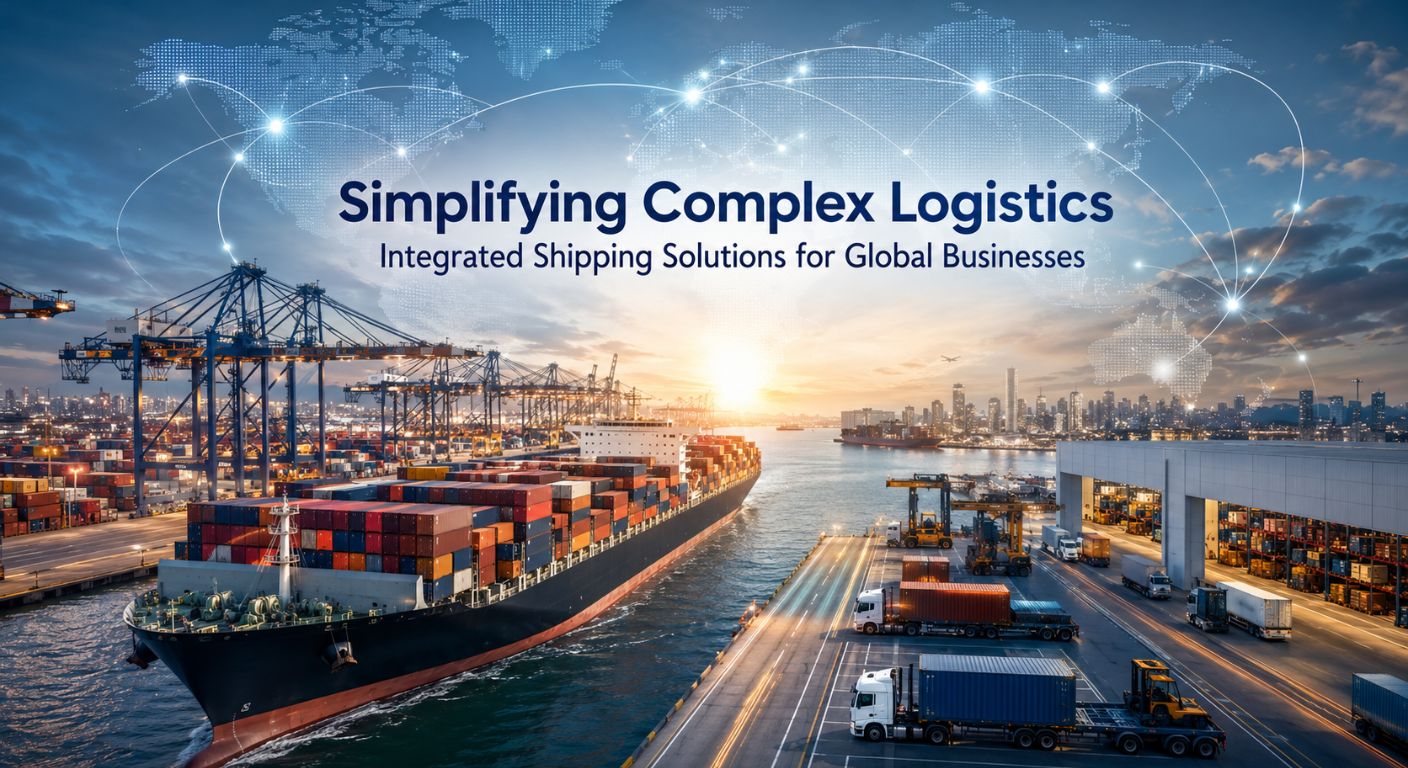
Simplifying Complex Logistics: Integrated Shipping Solutions for Global Businesses
Topic: Integrated Shipping Solution
Introduction: Why Global Logistics Is Becoming More Complex
In an increasingly interconnected world economy, expanding into international markets is no longer merely an opportunity it is a necessity for growing enterprises. However, as trade networks expand, the underlying supply chains become exponentially more complex. Managing international shipments today involves navigating an intricate web of multiple ocean ports, ocean carriers, specialized container types, constantly shifting regulatory standards, and comprehensive customs documentation. For importers, exporters, and manufacturers, balancing these varied requirements often diverts valuable time and resources away from core commercial objectives.
The modern logistics landscape demands faster turnaround times and complete end-to-end visibility. Yet, businesses regularly struggle with disjointed workflows when freight moves across borders. The need for robust global logistics solutions has never been more critical. To overcome fractioned operations, modern enterprises require an integrated shipping partner capable of harmonizing every link in the supply chain under a single unified management architecture.
The Need for Integrated Shipping Solutions
Traditionally, companies have managed international trade by contracting separate vendors for each stage of the shipment journey one for local port handling, another for ocean freight, a third for container procuring, and separate specialists for on-dock or inland haulage. This fragmented approach creates severe communication gaps, inconsistent tracking, cumulative delays, and costly documentation errors. When a single cargo movement involves multiple service providers, determining accountability during disruptions becomes extremely difficult.
Transitioning to integrated shipping solutions eliminates these operational friction points. By consolidating logistics operations under a single competent expert, businesses gain centralized streamlined coordination, end-to-end shipment visibility, and unified accountability. An integrated approach simplifies communication pipelines, reduces administrative overhead, and ensures that cargo moves seamlessly through port origins, transit hubs, and final destinations without costly handoff bottlenecks.
Liner Agency: Strengthening Port and Vessel Operations
At the core of efficient maritime trade is seamless port and terminal handling. Port delays can ripple through an entire supply chain, causing heavy demurrage charges and production downtime. Professional Liner Agency services provide essential ground-level and on-dock support to ensure smooth vessel and cargo movements within port terminals.
A dependable Liner Agency manages all aspects of vessel husbandry, port coordination, cargo documentation, terminal stevedoring, and customs clearance procedures. By leveraging deep local port expertise and established harbor relationships, a Liner Agent speeds up vessel turnaround times and reduces dwell time for cargo. For businesses requiring swift demurrage-free port transition, integrated Liner Agency services form an indispensable foundation for reliable international shipping services.
NVOCC: Simplifying Ocean Freight Management
Navigating ocean freight carrier networks, allocating container space, and securing competitive rates across diverse trade lanes can be overwhelming for individual shippers. Working directly with individual vessel operators often lacks the flexibility and personalized service needed for complex freight schedules.
Comprehensive NVOCC services (Non-Vessel Operating Common Carrier) address this challenge by acting as a flexible ocean freight consolidator and carrier. NVOCC operations provide dedicated Full Container Load (FCL) and Less than Container Load (LCL) solutions tailored to diverse volume requirements. From issuing direct bills of lading and optimizing sailing schedules to managing door-to-door or port-to-port customs documentation, an NVOCC provides shippers with a single responsible point of contact, simplifying international freight management while securing freight cost efficiencies.
Container Trading: Ensuring the Right Equipment
Global equipment shortages, container imbalances, and rigid carrier box leasing terms can instantly halt logistics operations. Obtaining suitable, high-quality containers on short notice remains a persistent headache for global traders handling high-volume or specialized cargo.
Integrated Container Trading services eliminate equipment availability bottlenecks by offering flexible buying, selling, and leasing options for various container types. Whether a business requires standard dry vans, high-cube units, temperature-controlled reefers, open-top boxes, or flat-racks for oversized freight, Container Trading specialists ensure that certified, inspected, and sound equipment is always readily accessible. By sourcing customized and dedicated containers, traders gain total control over equipment reliability and shipment scheduling.
Project Cargo: Managing Complex and Oversized Shipments
Not all freight fits neatly into standard rectangular boxes. Industrial machinery, heavy plant equipment, mining infrastructure, and energy-sector turbines present unique logistical challenges due to their extreme weight, dimensions, and high commercial value. These Out-of-Gauge (OOG) shipments require advanced engineering and meticulous pre-planning.
Specialized Project Cargo logistics eliminates operational risk through comprehensive route surveys, feasibility studies, formal risk assessments, and permit acquisitions from regulatory bodies. Project logistics experts coordinate heavy-lift equipment, multimodal overland haulage, rigging, and on-site load supervision. Executing specialized Project Cargo with precision guarantees that critical infrastructure reaches its destination safely and without costly delays.
Third Country Shipment: Connecting Global Trade Beyond Traditional Routes
In today’s decentralized global supply chain, trading entities frequently purchase goods from suppliers in one country and sell them directly to buyers in a third nation without the cargo ever passing through the headquarters’ home country. Managing these cross-trade shipments demands total confidentiality and rigorous multi-jurisdictional compliance.
Professional Third Country Shipment solutions (cross-trade logistics) seamlessly connect direct trade lanes while protecting sensitive commercial information. Through an established global network of agents, third-country logistics specialists handle switch bills of lading, complex cross-border documentation, multimodal routing, and local customs clearance. This enables businesses to expand their international reach and reduce transit times without setting up local offices in every trading territory.
CIS Logistics Solutions: Connecting Difficult and Landlocked Markets
Shipping freight to landlocked regions such as the Commonwealth of Independent States (CIS) and Central Asian markets presents formidable geographic and logistical barriers. Reaching destinations across Uzbekistan, Kazakhstan, Turkmenistan, and surrounding territories requires transiting complex sea-rail-road corridors and navigating intricate regional customs regimes.
Tailored CIS Logistics Solutions overcome landlocked transportation challenges through synchronized multimodal connectivity. By combining ocean freight to feeder ports with direct rail transit and heavy-duty road haulage, CIS specialists offer reliable door-to-door or terminal-to-terminal delivery. Leveraging strong local partnerships and regional customs expertise guarantees that permitting and boundary transits are executed efficiently.
How These Services Work Together
The true value of an integrated logistics provider lies not just in offering individual services, but in synchronizing them into a single, highly harmonized ecosystem. Consider a complex global supply chain scenario: an overseas industrial equipment manufacturer may need to lease reefer containers via Container Trading, secure vessel capacity through NVOCC services, utilize Liner Agency services for efficient origin port clearance, execute a Third Country Shipment to avoid duplicate duties, and finally mobilize CIS Logistics Solutions to deliver heavy-lift units via rail to a landlocked facility in Central Asia.
When these six specialized capabilities Liner Agency, NVOCC, Container Trading, Project Cargo, Third Country Shipment, and CIS Logistics are managed under one capable partner, freight moves effortlessly. Instead of balancing six distinct contracts, multiple brokers, and conflicting timelines, businesses enjoy a single streamlined workflow that reduces administrative complexity and prevents operational bottlenecks.
Key Benefits of an Integrated Shipping Approach
Partnering with an integrated logistics provider offers measurable strategic and operational advantages for international traders:
- Simplified logistics coordination: A single point of contact eliminates vendor management headaches and streamlines all decision-making.
- Better communication: Unified reporting channels remove miscommunications between carriers, ports, and overland transport units.
- Improved shipment visibility: Real-time end-to-end tracking provides actionable insights at every stage of transit.
- Efficient documentation: Accurate, consolidated handling of bills of lading, customs declarations, and permits reduces compliance risks.
- Flexible transportation solutions: Dynamic multimodal routing options adapt swiftly to port congestion or trade lane disruptions.
- Better container availability: Direct access to dedicated equipment prevents costly delays caused by global box shortages.
- Support for specialized cargo: Expert engineering and on-site supervision for heavy-lift, oversized, and out-of-gauge freight.
- Easier management of international trade routes: Frictionless execution of complex cross-trade and third-country logistics.
- Reduced operational complexity: Consolidated invoicing and aggregated vendor management lower administrative overhead.
- Greater supply-chain reliability: Redundant logistics networks guarantee higher on-time delivery rates.
Choosing the Right Integrated Shipping Partner
Selecting the ideal logistics partner is a critical strategic decision. Businesses must evaluate potential providers beyond basic freight rates. Key considerations include:
- Industry experience & global network: Proven track record across various geographies and diverse freight categories.
- Local port & terminal expertise: In-depth knowledge of port operations, customs regulations, and stevedoring practices.
- Multimodal connectivity: Robust capabilities in integrating ocean, rail, and road freight networks.
- Specialized cargo handling: Technical capacity and certified equipment to manage OOG and project freight.
- Transparent communication: Dedicated account managers providing proactive prompt updates and agile problem-solving.
Why Jodac Shipping
Jodac Shipping stands out as a premier, reliable logistics partner for enterprises engaged in complex international trade. By seamlessly combining six core specializations Liner Agency, NVOCC, Container Trading, Project Cargo, Third Country Shipment, and CIS Logistics Solutions Jodac Shipping delivers complete end-to-end shipping and logistics solutions tailored to your unique commercial requirements.
Whether you are navigating strict port terminal timelines, moving heavy industrial machinery across continents, procuring specialized container equipment, or expanding trade into hard-to-reach landlocked markets, Jodac Shipping provides the technical expertise, global network, and dedicated support needed to keep your global supply chain solutions moving efficiently and cost-effectively.
Conclusion
Global logistics does not have to be unnecessarily complicated. While international trade presents constantly evolving challenges, working with an integrated shipping partner transforms fragmented supply chains into streamlined, reliable competitive advantages. By consolidating equipment sourcing, ocean freight consolidation, port handling, specialized project engineering, cross-trade management, and landlocked regional transport under a single experienced provider, businesses can shift their focus from logistical headaches to strategic business growth.
Ready to simplify your global logistics operations?
Connect with the logistics experts at Jodac Shipping today to discover how our tailored integrated shipping solutions can optimize your supply chain performance, reduce operational costs, and expand your international reach.
Visit jodacshipping.com or contact our dedicated freight specialists to get started