
Newsletters
Stay updated with our latest news, insights, and company updates. Explore our collection of newsletters below.
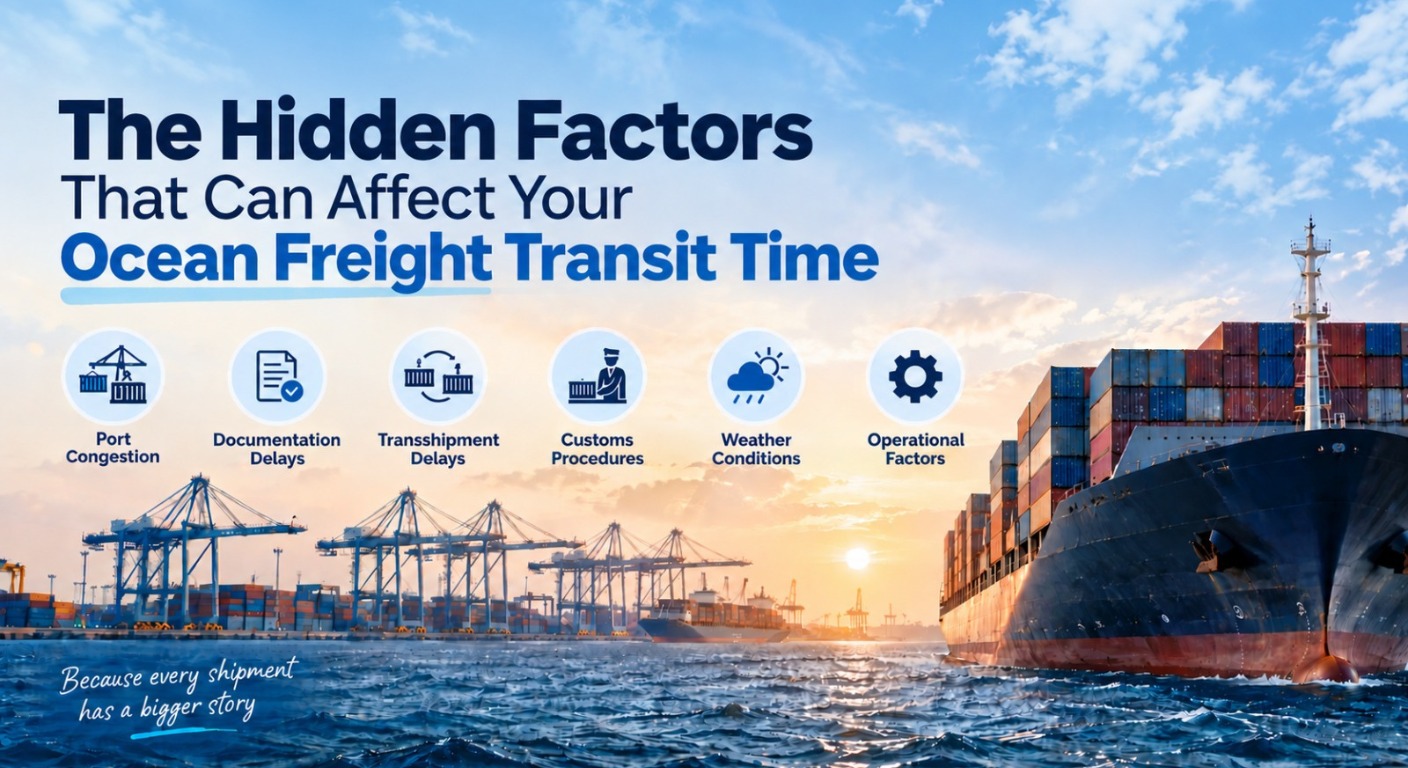
The Hidden Factors That Can Affect Your Ocean Freight Transit Time
Topic: ocien frieght
When planning an international shipment, ocean freight transit time is one of the most important factors businesses consider. Knowing when cargo is expected to arrive helps importers and exporters manage inventory, production schedules, customer commitments, and overall supply chains.
However, the transit time quoted for an ocean shipment is not always the exact time your cargo will take to reach its destination. Several hidden factors can influence the journey after your container leaves the origin port. From port congestion and documentation issues to customs clearance, transshipment, weather conditions, and operational disruptions, even a well-planned shipment can experience unexpected delays.
Understanding these factors can help businesses plan more accurately and reduce the risk of costly interruptions.
What Is Ocean Freight Transit Time?
Ocean freight transit time refers to the period required for cargo to travel by sea from the origin port to the destination port. It generally covers the sailing time between ports, but the overall shipment timeline can also be influenced by activities before departure and after arrival.
For example, a shipment may have a planned sailing time of 20 days, but the actual delivery timeline can become longer because of port congestion, vessel schedules, customs procedures, transshipment, documentation problems, or unexpected operational events.
This is why businesses should look beyond the basic sailing schedule when estimating their sea freight transit time.
1. Port Congestion Can Slow Down Your Shipment
One of the biggest factors affecting ocean freight transit time is port congestion.
When a port experiences high container volumes, limited berth availability, equipment shortages, labor constraints, or vessel bunching, ships may have to wait before they can load or unload cargo. Containers can also spend additional time inside terminals before being released.
Port congestion can affect your shipment at both the origin and destination. Even if the vessel itself follows its sailing schedule, delays at the terminal can extend the overall shipping timeline.
How Can Businesses Prepare?
Businesses can reduce the impact of congestion by monitoring port conditions, planning shipments ahead of peak periods, and working with an experienced shipping partner that can provide updates and alternative solutions when operational conditions change.
2. Documentation Errors Can Create Unexpected Delays
Accurate documentation is essential for smooth international shipping.
Ocean freight shipments involve several documents, including commercial invoices, packing lists, bills of lading, certificates, declarations, and other documents depending on the cargo and destination country.
A missing document, incorrect cargo description, inconsistent information, or documentation submitted late can delay cargo processing and potentially affect the planned vessel or customs clearance.
In international shipping, even a small documentation error can have a significant impact on the overall timeline.
The Solution: Accurate Documentation
Preparing shipping documents correctly and submitting them within the required timelines can help avoid unnecessary delays. Working with a knowledgeable logistics partner can also help identify documentation requirements before the shipment moves.
3. Transshipment Can Add Time to the Journey
Not every ocean shipment travels directly from the origin port to the final destination.
Some cargo moves through an intermediate port before reaching its destination. This process is known as transshipment.
During transshipment, containers may need to be discharged from one vessel and loaded onto another. If the connecting vessel is delayed, has limited capacity, or operates on a different schedule, the cargo may have to wait for the next available connection.
Therefore, the number of port calls and transshipment points can have a direct impact on sea freight transit time.
When comparing shipping routes, businesses should consider not only the quoted sailing duration but also whether the service is direct or involves transshipment.
4. Customs Clearance Can Affect Final Delivery
Arriving at the destination port does not necessarily mean that your shipment is ready for delivery.
Imported cargo may need to complete customs procedures before it can leave the port or terminal. Customs authorities may review documentation, cargo classification, declared values, permits, or other regulatory requirements.
If documentation is incomplete or additional inspection is required, cargo clearance can take longer than expected.
For businesses with time-sensitive shipments, efficient customs clearance is an important part of managing the overall delivery timeline.
5. Weather and Natural Conditions Can Disrupt Sailing Schedules
The ocean is unpredictable, and weather conditions can influence vessel operations.
Storms, cyclones, heavy winds, rough seas, fog, and other severe weather conditions can affect vessel movements, port operations, and sailing schedules. In some situations, vessels may need to alter their routes or wait until conditions become safer.
These disruptions are generally outside the control of shippers and carriers, but they can still affect ocean freight transit time.
Building some flexibility into delivery schedules can help businesses manage weather-related uncertainty.
6. Vessel Schedules and Operational Factors Matter
Ocean shipping depends on a complex network of vessels, ports, terminals, equipment, crews, and connecting services. Operational issues involving any part of this network can influence transit times.
Examples include:
- Vessel schedule changes
- Equipment shortages
- Terminal operating restrictions
- Vessel maintenance
- Port closures
- Labor disruptions
- Blank sailings
- Changes in carrier schedules
- Container availability issues
These factors can cause cargo to depart later than planned or require changes to the original routing.
This is why reliable shipment tracking and proactive communication are essential for effective ocean freight management.
7. Peak Seasons Can Increase Shipping Delays
Seasonal demand can also influence ocean freight transit time.
During periods of high shipping activity, such as major holiday seasons, peak retail periods, or before important regional holidays, container volumes can increase significantly. Higher demand can place pressure on vessels, ports, terminals, and inland transportation networks.
As a result, businesses may experience longer booking lead times, port congestion, equipment shortages, or schedule disruptions.
Planning shipments well in advance during peak seasons can help reduce the risk of delays.
8. Inland Transportation Can Extend the Overall Delivery Timeline
Although ocean freight focuses on transportation by sea, the shipment's journey does not begin and end at the port.
Cargo must usually travel from the shipper's location to the origin port and from the destination port to the final delivery location. Road, rail, warehouse, and terminal operations can therefore influence the total supply chain timeline.
A vessel may arrive on schedule, but delays in trucking, rail transportation, container pickup, or warehouse coordination can still postpone final delivery.
Businesses should therefore consider end-to-end transit time, rather than looking only at the vessel's port-to-port schedule.
How Businesses Can Reduce Ocean Freight Delays
While not every delay can be prevented, businesses can take practical steps to improve shipment planning.
Plan Shipments in Advance
Avoid leaving bookings and documentation until the last minute. Advance planning provides greater flexibility when schedules change.
Maintain Accurate Documentation
Check invoices, packing lists, cargo descriptions, bills of lading, and regulatory documents carefully before shipment.
Choose the Right Shipping Route
Compare direct services with transshipment services based on both cost and expected transit time.
Monitor Port and Vessel Conditions
Regular tracking can help businesses identify potential disruptions early and make timely decisions.
Work With an Experienced Shipping Partner
A reliable shipping line or logistics partner can help coordinate documentation, vessel schedules, port operations, and shipment updates throughout the journey.
Why Accurate Transit-Time Planning Matters
For importers and exporters, an unexpected shipping delay can have consequences beyond a late container. Delayed cargo can affect production schedules, inventory levels, customer deliveries, warehouse planning, and business cash flow.
Understanding the factors that influence ocean freight transit time allows businesses to create more realistic delivery expectations and prepare contingency plans.
Rather than relying only on the standard sailing duration, businesses should consider the complete shipping process—from booking and documentation to port handling, vessel movement, customs clearance, and final delivery.
Choose Jodac Shipping Line for Reliable Ocean Freight Solutions
At Jodac Shipping Line, we understand that successful ocean freight is about more than moving a container from one port to another. It requires careful coordination, timely communication, accurate documentation, and awareness of the factors that can influence shipment schedules.
With the right planning and professional support, businesses can better manage shipping uncertainties and keep their international supply chains moving efficiently.
Whether you are importing or exporting cargo, understanding ocean freight transit time is the first step toward better logistics planning.
Plan smarter. Ship confidently. Move your cargo with Jodac Shipping Line.