
Newsletters
Stay updated with our latest news, insights, and company updates. Explore our collection of newsletters below.
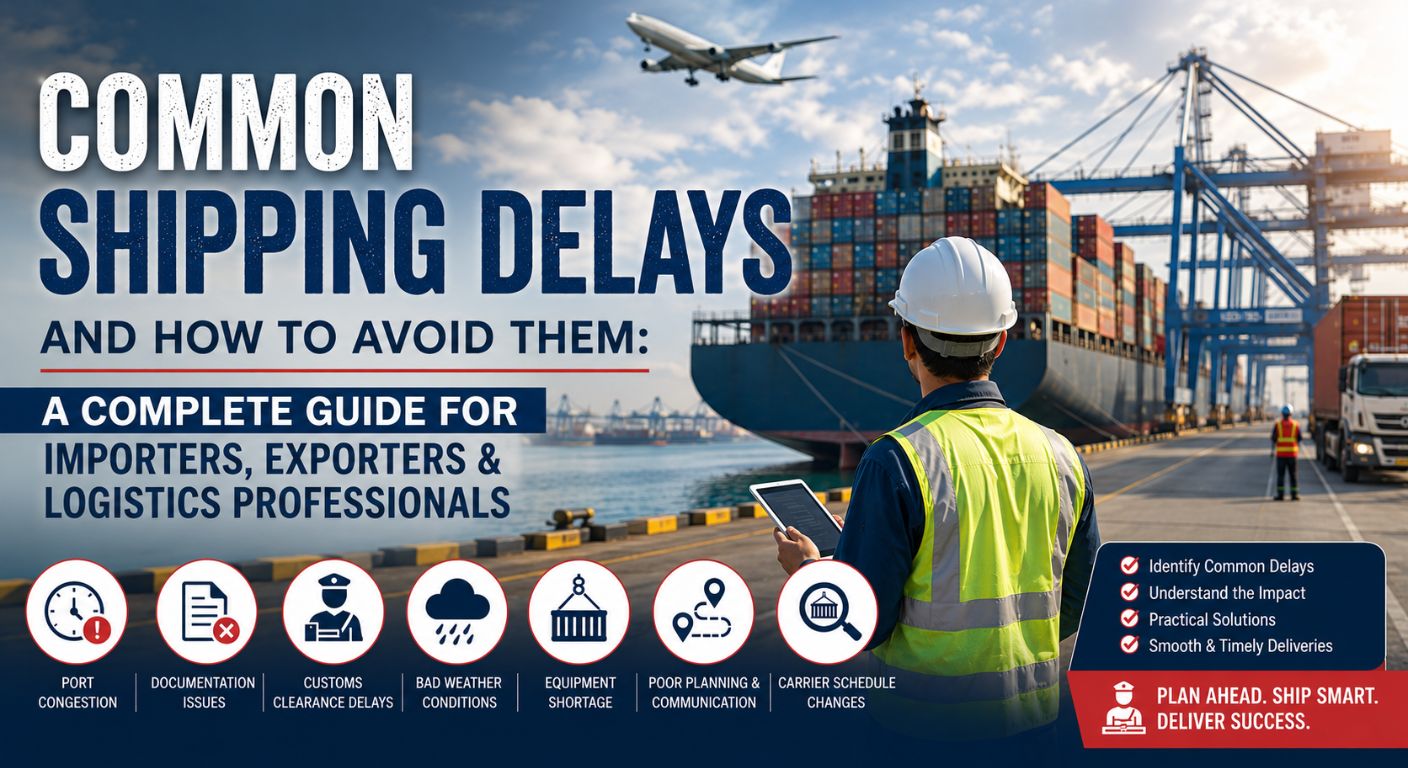
Common Shipping Delays and How to Avoid Them: A Complete Guide for Importers, Exporters & Logistics Professionals
Topic: Shipping Delays and How to Avoid
Introduction
Global trade depends on the seamless movement of cargo across oceans, ports, railways, and road networks. Every day, thousands of containers travel between manufacturers, ports, warehouses, and final destinations. While modern logistics has become faster and more efficient than ever before, a shipping delay remains one of the biggest challenges faced by importers, exporters, freight forwarders, shipping lines, and supply chain managers.
Whether you're shipping electronics from China, machinery from Germany, textiles from India, or agricultural products to the Middle East, even a small container delay can disrupt production schedules, increase storage costs, delay customer deliveries, and reduce profitability.
A freight delay rarely happens because of a single reason. Instead, it is usually the result of multiple factors such as port congestion, severe weather conditions, customs inspections, documentation mistakes, equipment shortages, or unexpected carrier schedule changes.
The good news is that many of these delays can be prevented or at least minimized with better planning, accurate documentation, proactive communication, and the right logistics partner.
This guide explains the most common causes of shipping delays, practical ways to avoid them, real-world examples from the shipping industry, and best practices that help businesses maintain reliable supply chains.
The Growing Challenge of Shipping Delays
International shipping involves numerous stakeholders: exporters, importers, freight forwarders, shipping lines, port authorities, customs officials, trucking companies, warehouses, and terminal operators.
If any one of these parties experiences a disruption, the entire shipment timeline may be affected.
Some delays last only a few hours, while others can extend for weeks depending on the severity of the issue.
Common consequences include increased demurrage charges, higher detention costs, missed production deadlines, stock shortages, contract penalties, lost sales opportunities, customer dissatisfaction, and increased transportation costs.
Understanding the root causes is the first step toward avoiding unnecessary delays.
What Causes Shipping Delays?
1. Port Congestion
One of the leading causes of a container delay is congestion at ports.
When more vessels arrive than a port can efficiently handle, ships may have to wait offshore before receiving a berth. Containers may also remain inside terminals longer due to limited yard capacity or equipment shortages.
Common causes of congestion include seasonal import surges, holiday shipping peaks, labor shortages, crane maintenance, limited terminal capacity, high container volumes, and truck appointment shortages.
Major ports around the world occasionally experience congestion, especially during peak trade seasons.
How to Reduce the Risk
Book shipments early. Avoid peak shipping periods when possible. Use alternate ports if available. Track vessel schedules regularly. Work with experienced freight forwarders.
2. Weather-Related Delays
Shipping remains heavily influenced by nature.
Severe weather conditions can affect vessel departures, sailing routes, port operations, inland transportation, and cargo loading activities.
Examples include tropical cyclones, typhoons, hurricanes, heavy fog, strong winds, flooding, and snowstorms.
Sometimes vessels are forced to alter routes, reduce speed, or wait until conditions improve.
How to Minimize Weather Delays
Monitor seasonal weather forecasts. Build buffer time into delivery schedules. Purchase cargo insurance. Choose carriers with flexible routing capabilities.
3. Customs Clearance Delays
Customs authorities inspect cargo to ensure compliance with import and export regulations.
Shipments may be delayed because of random inspections, missing certificates, incorrect HS Codes, incomplete declarations, product compliance issues, or regulatory changes.
Even a minor documentation issue can significantly delay cargo release.
Prevention Tips
Submit documents before cargo arrival. Verify tariff classifications. Ensure certificates are complete. Stay updated with destination-country regulations. Use licensed customs brokers.
4. Documentation Errors
Incorrect paperwork remains one of the most preventable causes of a freight delay.
Common mistakes include incorrect consignee information, wrong container numbers, invoice discrepancies, incorrect cargo descriptions, missing signatures, expired certificates, and inaccurate Bills of Lading.
Even a spelling error can create customs issues.
Best Practices
Double-check every shipping document. Use standardized documentation procedures. Conduct internal audits before shipment. Digitize documentation wherever possible.
5. Carrier Schedule Changes
Shipping lines regularly adjust schedules because of operational disruptions, blank sailings, equipment shortages, vessel maintenance, port congestion, and weather conditions.
Cargo may miss its intended vessel and be rolled to the next sailing.
Reduce the Impact
Book early. Confirm vessel schedules. Track shipment milestones. Maintain communication with carriers.
6. Container Equipment Shortages
During periods of high demand, empty containers may not be available where exporters need them.
This creates delays before cargo even reaches the port.
Shortages often occur because containers accumulate in importing countries, trade imbalances increase, peak export seasons occur, and equipment repositioning is delayed.
Solutions
Reserve containers in advance. Use multiple shipping lines. Maintain flexibility with equipment types when feasible.
7. Inland Transportation Problems
Even after a vessel arrives on time, cargo may still be delayed because of inland logistics.
Examples include truck shortages, driver availability issues, railway congestion, road closures, and mechanical breakdowns.
Proper coordination between ocean freight and inland transport is essential.
8. Port Labor Disruptions
Ports rely on thousands of workers operating cranes, trucks, warehouses, and container terminals.
Strikes, labor disputes, or workforce shortages can reduce operational efficiency and create backlogs.
Businesses should monitor labor news and plan alternative routing whenever possible.
9. Security Inspections
Certain cargoes require additional inspections due to national security regulations, hazardous cargo classification, high-value goods, suspicious documentation, or random customs selection.
Although these inspections improve supply chain security, they can extend delivery times.
10. Peak Shipping Seasons
Shipping demand increases dramatically during Chinese New Year, Christmas season, Black Friday, Diwali, and major retail inventory cycles.
High demand often results in limited vessel space, higher freight rates, longer transit times, and container shortages.
Advance planning becomes especially important during these periods.
Practical Strategies to Avoid Shipping Delays
Successful companies focus on prevention rather than reacting after delays occur.
Plan shipments early to avoid last-minute bookings. Maintain accurate documentation by reviewing invoices, packing lists, Bills of Lading, certificates, and customs documents before shipment. Use digital shipment tracking for real-time visibility. Work with experienced logistics partners who can anticipate challenges and recommend alternatives. Diversify shipping routes instead of relying on a single port or carrier. Build safety buffers by allowing additional transit time for high-priority shipments. Communicate frequently with carriers, customs brokers, suppliers, and customers.
Real Industry Example
During the COVID-19 pandemic, global container shipping experienced unprecedented disruption. Congestion at the Ports of Los Angeles and Long Beach led to dozens of vessels waiting offshore for berths. Many importers faced delays of several weeks, while container shortages and equipment imbalances affected exporters worldwide. Businesses that diversified ports, booked shipments earlier, and maintained higher inventory levels were generally better positioned to reduce the impact on their supply chains.
Another example occurred during severe typhoon activity in East Asia, where temporary port closures in countries such as China and Japan caused vessel schedule changes and delayed cargo departures. Companies with flexible logistics planning and proactive communication were able to reroute shipments or adjust delivery timelines more effectively than those relying on a single shipping option.
Shipping Delay Prevention Checklist
Book cargo well in advance. Verify all shipping documents. Confirm customs requirements. Monitor weather forecasts. Track vessel schedules regularly. Choose reliable shipping partners. Reserve containers early. Purchase cargo insurance. Maintain regular communication. Keep customers informed of shipment status. Plan alternative routing options. Build contingency time into delivery schedules.
Frequently Asked Questions (FAQs)
1. What is a shipping delay?
A shipping delay occurs when cargo does not arrive at its planned destination within the expected timeframe due to operational, environmental, regulatory, or logistical issues.
2. What causes container delays most often?
The most common causes include port congestion, customs inspections, documentation errors, weather disruptions, carrier schedule changes, and equipment shortages.
3. Can documentation errors really delay cargo?
Yes. Incorrect Bills of Lading, invoices, HS Codes, or certificates can prevent customs clearance and significantly delay cargo release.
4. How can businesses reduce freight delays?
Businesses should book shipments early, maintain accurate documentation, monitor cargo continuously, and partner with experienced logistics providers.
5. Does bad weather always delay shipping?
Not always. Modern vessels can safely navigate many weather conditions, but severe storms, hurricanes, typhoons, heavy fog, and flooding may require schedule changes for safety.
6. What is port congestion?
Port congestion occurs when terminals receive more vessels or containers than they can efficiently process, resulting in longer waiting times for ships and cargo.
7. Why is customs clearance sometimes slow?
Customs may conduct random inspections, verify documentation, or request additional compliance information before releasing cargo.
8. Should businesses maintain extra inventory to avoid delays?
For critical products, maintaining safety stock can reduce the impact of unexpected shipping disruptions and protect business continuity.
Conclusion
Shipping delays are an unavoidable reality in global trade, but they do not have to become costly business disruptions. By understanding the primary causes whether they stem from port congestion, adverse weather, customs procedures, documentation errors, or carrier-related issues businesses can take proactive measures to reduce risk. Careful planning, accurate paperwork, strong communication, and the use of reliable logistics partners all contribute to a more resilient supply chain. Organizations that invest in preparation and visibility are better equipped to keep cargo moving efficiently, minimize unexpected costs, and deliver consistent service to their customers, even when challenges arise.
Partnering with the right logistics provider can make a significant difference in avoiding delays and ensuring smooth cargo movement. Jodac Shipping Line offers dependable freight solutions, end-to-end shipment coordination, and expert support to help businesses navigate complex global shipping challenges. With a strong focus on reliability, transparency, and timely delivery, Jodac Shipping Line helps ensure your cargo reaches its destination safely and on schedule.